
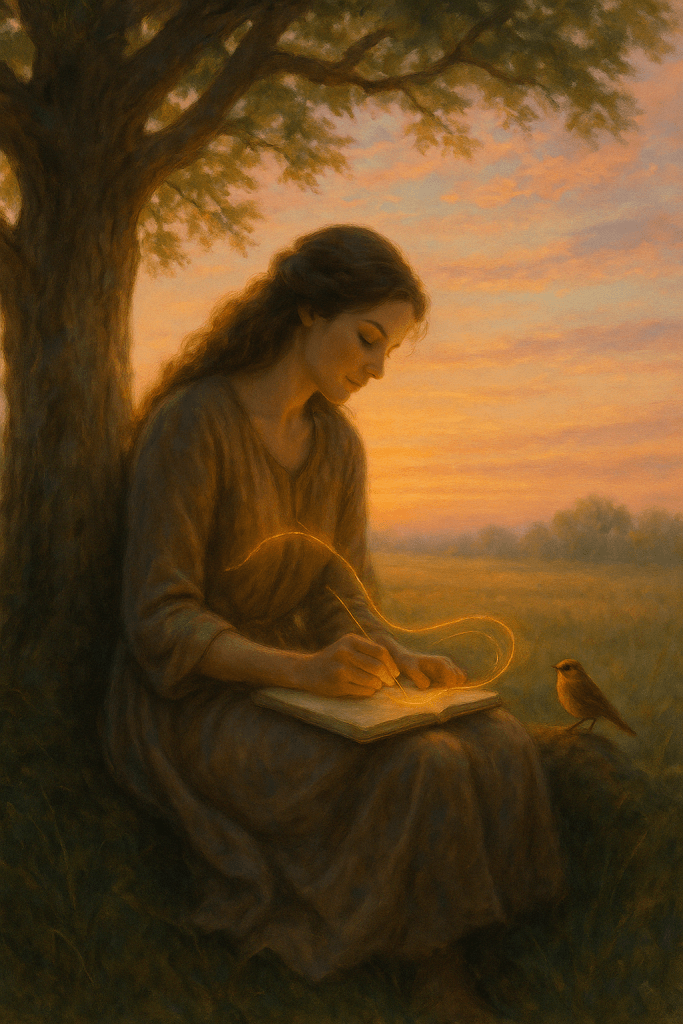
There are beginnings few can understand—childhoods spent not between four walls, but beneath open skies.
I was raised by the wild fields and the rivers. Before I ever knew the comfort of a bath, I learned to cleanse in the cold, living waters. Before I ever sipped from a porcelain cup, I gathered clover and pine needles to steep into tea. We lived with the land, our warmth from wood stoves, our shelter from whatever stood between us and the wind.
There was freedom in it. A rare kind of knowing—that I belonged to the earth, and she belonged to me.
But when we went into town, I felt the shift. Eyes lingered too long or looked away too fast. Words spoken under breaths. The feeling that something about me—about us—wasn’t right.
Even as a child, I knew. This is how shame plants its seeds. And yet… it was the same earth that taught me how to be free.
Reflection Prompts:
1. Meeting Shame in the Eyes of Others
When did I first feel that I was “different”? How did the words or glances of others shape how I saw myself? What part of me did I start to hide to feel safe or accepted?
2. Remembering Freedom with the Earth
What did the wild places teach me that no one else could? Where did I feel safest—in the tall grasses, the river’s edge, under the open sky? What simple, earthy rituals brought me joy? (Gathering wild tea, bathing in the river, warming by the wood stove…) If the earth could speak to me now, what would she remind me about who I really am?
3. A Dialogue Between Shame and Freedom
(Optional Creative Exercise)
Write a short dialogue where Shame speaks first and Freedom responds—not from the mouths of people, but from the voice of the river, the crackling fire, or the whispering wind. Let the earth have her say.
Closing Blessing:
You were shaped by the wind and the water,
Warmed by the fires you built with your own hands.
Before the world taught you to question your belonging,
The earth named you enough.
And she still does.
 Jenny Wren Threads
Leave a comment